|
 Stone Circles:
(Form and Function)
Stone Circles:
(Form and Function)
|
The Chronology of Stone Circles: |
With approximately 1,000 stone circles in the British Isles, there is no
question that the islands were host to a peopple for whom the circular
shape it was the homeland of the stone-circle builders for thousands of
years. In Britain, the stone-circle building phase was preceded by a short
period of 'Henge'
building. However, there are also stone-circles outside the British Isles,
and some are considerably older....
|
9,000 BC |
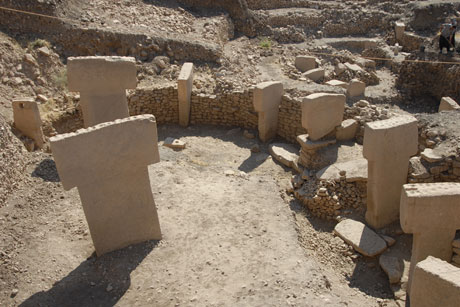
Gobekli Tepe,
Turkey. The oldest known megalithic temple/circle in the world. |
| |
|
|
4,500 BC |
Nabta, Egypt. Oldest known stone circle.
Placed on the Tropic of Cancer. |
|
4,000 BC |
Cromleque dos Almendres, Portugal. Twin circles. Possibly the oldest
in Europe. |
|
3,800 BC |
Xaghra circle,
Gozo, Malta. (location of
Hypogeum II) |
|
3,300 BC |
First British circular enclosures of earthen banks (1) |
|
3,250 BC |
Newgrange (stone-circle), Llandegai I Henge (1) |
|
3,200 BC |
Stonehenge
I, Barford Henge, Arminghall Henge (1) |
|
3,100 BC |
Ballynoe, Carles (1) |
|
2,950 BC |
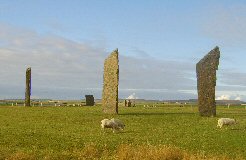
Stennes
(1) |
|
2,600 BC |
Stonehenge
II,
Avebury
(1) |
|
2,500 BC |
Early Recumbent Circles (1) - (Lunar observation) |
|
2,400 BC |
Arbor Low
(1) |
|
2,350 BC |
Merry
Maidens (1) |
|
2,300 BC |
Stonehenge III,
Rollrights, Woodhenge (1) |
|
2,200 BC |
Llandegai II Henge, Druid's Circle (1) |
|
2,000 BC |
Callanish
(1) |
|
1,900 BC
|
Berrybrae
recumbent () |
|
No stone-circles appear to
have been built in N. Europe after 1,500 BC (2) |
(After
Burl - 1.)
| The
Classification of Stone-circles: |
The classification of stone circles.
The plain stone-circle (one which is circular),
is not as common as might be first expected. There are now several
classifications of 'circles', such as:
Oval,
Ellipse,
Egg-Type I, Egg-Type II,
Recumbent, Henge, Henge (1A), Henge (1B), Henge (1C), Henge (II), Henge (IIB), Circle-Henge, Ring-Cairn, Kerb-Cairn, Flattened Circle A, Flattened Circle B, Flattened Circle C, Flattened Circle D, Timber, Concentric, Sub-circular, Four-poster, Axial...
(Enough... enough...)
The very fact that so many of these categories are determined
by the shape of the 'circle', and that circles are classified
according to their shape confirms the suspicions of Prof. Alexander Thom, who
first proposed the existence of a 'megalithic yard' and thereby, that there is an underlying geometry
that determined the shape of many of the more significant European stone-circles.
(More
about the Megalithic Yard)
|
The Purpose of Stone Circles: |
Stone-circle development occurred around
the ancient world for thousands of years,
and there are several different types of circle, with several showing changes
in use and design over time. Many stone circles have been shown to
have strong associations with both geometry and astronomy, and in several
examples, the specific
location of the circle can be shown to have been more important than the
availability of stone.
Even more remarkable than the stones
themselves is our ignorance over their original purpose. Geoffrey of Monmouth, in 1135 wrote that the builders of
Stonehenge originated in the 'remotest confines of Africa' and that
the stones were 'transported by giants', while Fergusson attempted to tackle the subject in 1880, concluding
that they were originally constructed as 'holding pens', 'meeting places',
or 'memorials of great battles'.
The evolution of the stone circle reveals
much about their probable purposes. It has long been suspected that
henges were designed in order to create an
artificial horizon line, and in Scotland,
recumbent circles have been shown to
have had an intimate lunar association (see below). It is now reasonably
accepted that most circles included astronomical orientations and
alignments, and geometry,
with the obvious inclusion of rituals of death (i.e. at
Xaghra circle, Malta
and Stonehenge, England). The discovery of
specific astronomical purposes behind the stone circles (see below), is far
removed from the earlier ideas of Fergusson (although we are still a long
way from understanding them).
|
Stone Circles and Astronomy: |
Although it is not possible to say that
all stone circles were built with an astronomical consideration...
It is clear that
many share an intimate association with both astronomy and landscape.
A connection to both lunar and solar observations has been
recognised in the design of several prominent stone-circles such as
Callanish, Stonehenge, Almendres, Newgrange and the numerous RSC's (recumbent
stone circles) of Scotland, which are identified with lunar observation.
|
There are only two latitudes
in which the Moon's maximum declination is the same as the latitude,
meaning that at its maximum elongation it goes through the zenith
(directly overhead). These two latitudes are 38.33˚ N (Almendres),
and 51� 10' N (Stonehenge).
|
As well as being
associated to Stonehenge, Almendres has a secondary lunar connection
with another two significant monuments in Portugal, which are the
Zambujeiro passage-mound and the 'cromeleque'
da Xarez (The
reconstructed 'cromeleque' da Xarez is in-fact a
quadrangle). The three sites form a 50km alignment which has been
suggested to be related to the spring moon (110�).
(Click here for more on this subject)
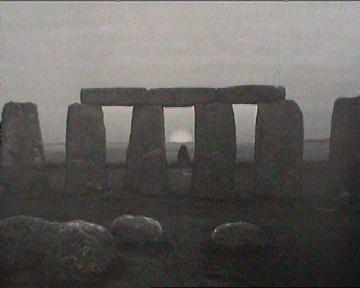 The connection between stone circles and
astronomy is not however, so clean-cut. A visit to almost any circle is all
one needs to realise that although certain stones were selected to
demonstrate a preference for orientation (with portal stones or through a
gradation in height), the stones of most circles were placed evenly apart
around the circumference, having a symbolic placement rather than a
functional one. The choice of stone over wood added to the selection and
transport of specific types of stones over long distances also demonstrates the
importance of stone itself to the circle builders. The connection between stone circles and
astronomy is not however, so clean-cut. A visit to almost any circle is all
one needs to realise that although certain stones were selected to
demonstrate a preference for orientation (with portal stones or through a
gradation in height), the stones of most circles were placed evenly apart
around the circumference, having a symbolic placement rather than a
functional one. The choice of stone over wood added to the selection and
transport of specific types of stones over long distances also demonstrates the
importance of stone itself to the circle builders.
Nabta, Egypt:
Because of Nabta's proximity to the Tropic of Cancer, the
noon sun is at its zenith about three weeks before and three weeks after the
summer solstice, preventing upright objects from casting shadows.
The Nabta stone-circle is the only megalithic
construction of its kind in all Egypt. It is positioned exactly on the Tropic of
Cancer.
The people at Nabta
built an observatory � a 12-foot (4-meter) circle of huge slabs of stone,
with four pairs of taller stones aligned opposite each other. Two pair
provided a "window" on the solstice sunrise, while the other two aligned
on an almost-perfect north-south axis. Nabta's
calendar circle was used at least 6,000 years ago, and probably earlier
Nabtans erected
several other megaliths in the area - dark stones up to 3m above the
desert landscape, scattered across a square mile. Some of the megaliths
formed north-south and east-west sightlines, like a giant stone compass,
and probably remained visible when the summer inundation filled the Nabta
basin.
"We see two kinds
of astronomy here � solstice alignments and cardinal alignments," says J.
McKim Malville, a professor of astronomy at the University of Colorado at
Boulder and a member of the team that confirmed the alignments in a paper
published earlier this year.
"The astronomical
nature of the site was clear while we were there," says Malville. "These
alignments are so simple and straightforward, there's no doubt about
them."
(More about
Nabta)
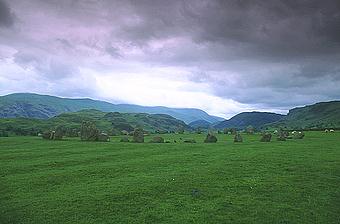
Castlerigg, England:
The Stone circle at Castle Rigg,
Cumbria was one of the most successful that Alexander Thom came across
in terms of combining astronomical sight-lines with the geometric
construction of the stone circle itself. Thom himself pointed out the
remarkable difficulties in trying to find a site where the skyline
yielded the exact right properties to match the astronomic requirements
and geometry of the circle itself. Although the geometric connections
with the landscape are not immediately visible today, it has become
clear that the builders were endeavouring to express, control or 'come
to terms with something'. In addition, J. Glover made some interesting
comments regarding Castle Rigg, namely that the specific placement of
certain stones enhanced the shadow-effects caused by the sun at specific
times of the year. As the circle was built onto a gentle slope, the
largest stone creates a shadow nearly a half-mile long at sunset on
midsummer's day.
(More
about Castlerigg)
|
The Geometry of Stone-circles: |
Burl makes note of the 'mistaken
coincidence' about the number of stones in the British stone-circles. He
says of it:
'From Brodgar,
where there was once 60 stones, to the Stripple stones with a probable
thirty, the builders may have counted in multiples of six. Stennes had
twelve. The inner and outer rings at Balfarg have been computed at
twenty-four and twelve respectively. Twenty-four has been suggested for
Cairnpappel, thirty-six for
Arbor Low, and the same number for the devils
quoits'. (3)
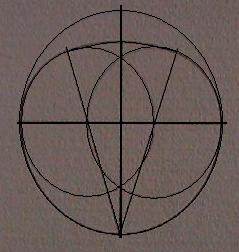
In
contrast to Burl's suggestion that such geometry was purely coincidental,
Prof. Alexander
Thom radically suggested that geometry was deliberately em[loyed in the
design of certain prehistoric
sites (such as at Avebury, left).
He surveyed hundreds of European megaliths and concluded that
fundamental mathematic principles, based upon a common unit of measurement
(which he called the
megalithic yard),
had been applied in the
design of certain sites. As the megalithic tradition in Europe can be traced
back to at least 4,000 BC, if not earlier still, his work is still not
accepted by most archaeologists, although such a strong presence of
geometry should not be ignored, as is clearly suggests that the design of
many sacred sites seems to have been based on a sophisticated
philosophy of sacred science such as was taught centuries later by the
Pythagorean school.
As
Professor Thom observes in his book Megalithic Sites in Britain
(1967):
�It
is remarkable that one thousand years before the earliest mathematicians
of classical Greece, people in these islands not only had a practical
knowledge of geometry and were capable of setting out elaborate
geometrical designs but could also set out ellipses based on the
Pythagorean triangles.�
John Michell showed in the 1970's that the
several stone circles of South-Western England shared a geometric
relationship to each other.
(European Stone
'Quadrangles' and their Latitudes)
(Geometric
Alignments)
|
Stone circle facts:
The circumference of the Stonehenge sarsen-stone-circle (100ft), is
the same as that of the flattened top of
Silbury hill.
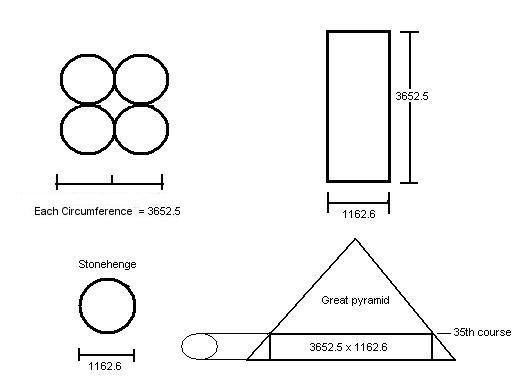
The same measurement
is also exactly one 'quarter aurora', a standard unit of Egyptian
area measurement.
(More
about the Geometry of Giza)
|
| Recumbent
Stone Circles (RSC's) |
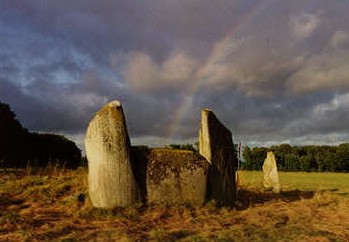 Scotland is home to hundreds of 'Recumbent' stone circles.
These circles are usually fairly small, the largest being (Innesmill
(B5/1 at 110 ft diameter). Recumbent circles in the Grampians of Scotland have been shown to have a primary
association with the observation of the extreme setting points on the lunar
cycle. They are defined by a prominent 'recumbent' stone, positioned
horizontally, so that the moon sets behind it at both extremes of its cycle,
and upon which stones cup-marks are often found. Scotland is home to hundreds of 'Recumbent' stone circles.
These circles are usually fairly small, the largest being (Innesmill
(B5/1 at 110 ft diameter). Recumbent circles in the Grampians of Scotland have been shown to have a primary
association with the observation of the extreme setting points on the lunar
cycle. They are defined by a prominent 'recumbent' stone, positioned
horizontally, so that the moon sets behind it at both extremes of its cycle,
and upon which stones cup-marks are often found.
It is an interesting fact that the only
recumbent circles found outside of Scotland, are in the Ross-Carbery area of
Ireland, which places them too far south to make them any use as lunar
observatories, and have in fact been shown to be solar in their
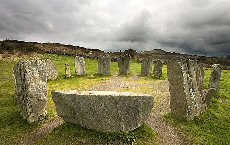
orientation. Cope (4), makes note of the
Drombeg RSC, where the sun has been observed setting at midwinter
(solstice), directly into a notch in the landscape behind the recumbent
stone.
Recumbent Stone Circles are one of the most
definite proofs we have that Neolithic people were not only aware of
the 18.6 year lunar cycle, but that they followed it closely. They
demonstrate that the lunar cycle was considered an important part of
the social complex in North-eastern Scotland c. 3,000 BC - 1,500 BC.
(More about Recumbent Stone
Circles)
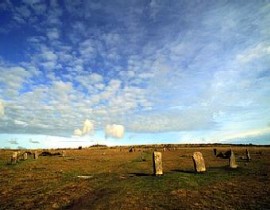
England is home to examples of numerous
double circles, as well as several 'Triple-circles' such as 'The
Hurlers', Merrivale,
Stanton Drew,
Avebury,
Thornborough and
Grey Wethers,
to name but a few. Their exact purpose is still only to be guessed at, but a
geometric and/or astronomic association is predicted . (More to follow
soon...)
The
Hurlers has been suggested by
astronomers to have been aligned to Orions belt at the time of
building (Circa 1500 BC).
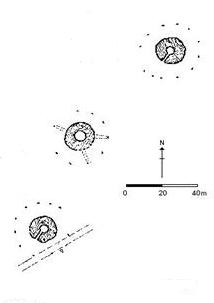
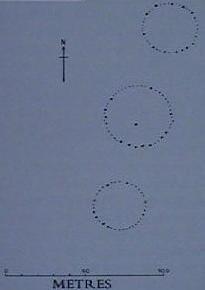
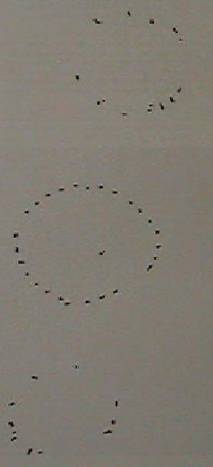
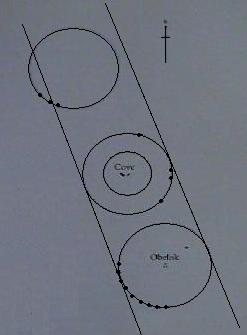
(From left to right:
Clava cairns,
The Pipers,
The
Hurlers and Avebury).
The theme of triple-aligned
circles is also common to
Henges, such as the
Priddy circles, and Thornborough.
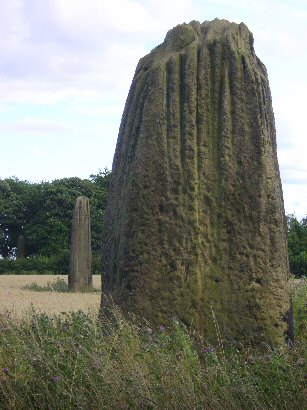
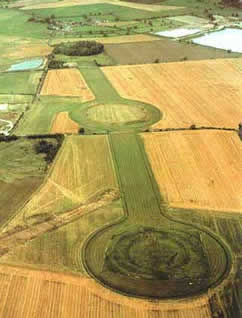
The three Devil's Arrow's
(left), are aligned towards the Thornborough
Henges (right).
(More
about Triple Stone-circles and Orion)
There are a handful
of megalithic structures in Europe which whilst retaining an essential
geometric design - are not circles. Remarkably, they also incorporate
a relationship between their dimensions and the latitudes upon which
they were built.
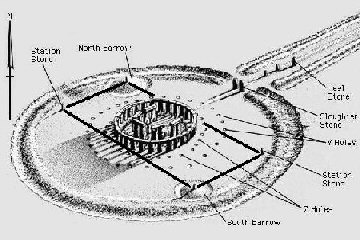
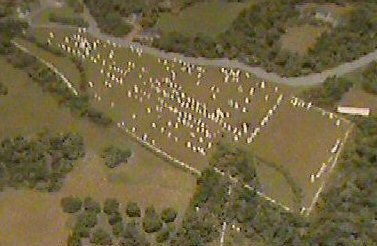
Quadrangular enclosures at Stonehenge
(left), and Crucuno (right).
(More about Quadrangles, Geometry and
Latitude).
|
Gallery of Stone-circles: |
Stone circles from around the world.
|
 |
 |
 |
 |
 |
|
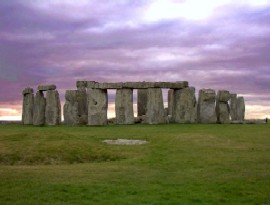
Stonehenge, England |
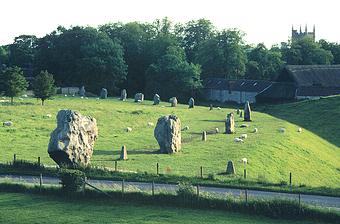
Avebury, England |
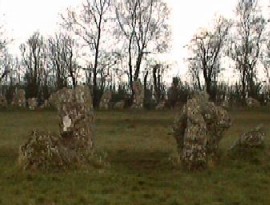
Rollrights, England |
Castlerigg, England |
The Hurlers, England |
|
 |
 |
 |
 |
 |
|
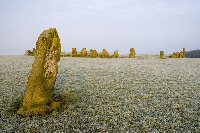
Beltany, Ireland. |
Drombeg, Ireland. |
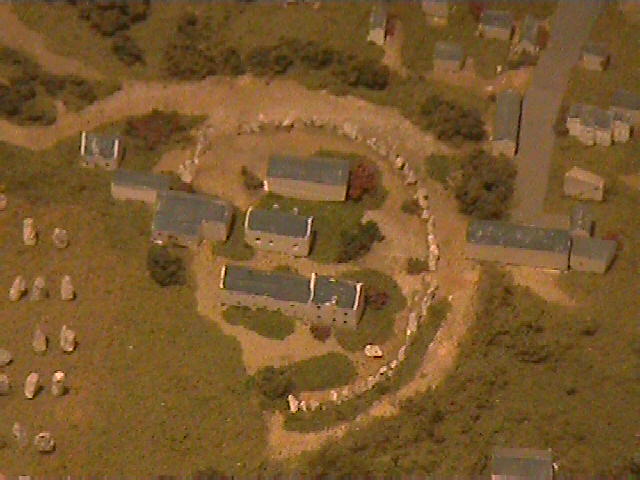
Carnac, France
|
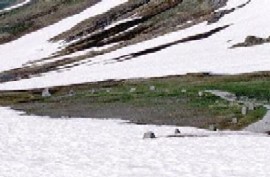
Petit St. Bernard, France/Italy |
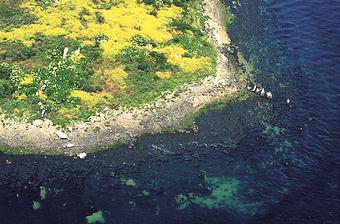
Er Lannic, France |
|
 |
|
 |
|
 |
|
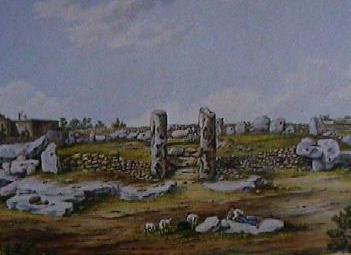
Xaghra Circle, Malta |
|
Gobekli Tepe, Turkey. |
|
Cromleque
dos Almendres, Portugal |
| |
 |
 |
 |
 |
| |
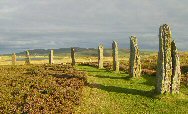
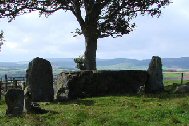
Brodgar, Scotland |
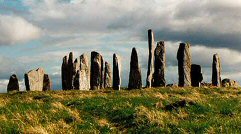
Callanish, Scotland |
Stennes, Scotland. |
Old Keig, Scotland |
Other stone-circles.
|
Name |
Location |
Description |
|
Nabta |
Egypt
|
This stone circle is only a part of the
important megalithic complex at Nabta, located on the tropic of
Capricorn. |
|
Nr Tangiers |
Morocco
|
A stone circle was found near Tangiers. (9). |
|
Los Milhares |
Spain |
A chambered mound
surrounded by a stone circle.
|
|
Talati de Dalt |
Spain |
A Stone Circle and 'talayot'
towers.
|
|
Trepuco |
Spain |
A Stone Circle and 'talayot'. |
(Recumbent
Stone Circles)
(Index
of Ancient Sites)
(A-Z Site
Index) |